Evening and Half-Day Treatment: Getting Help Without Quitting Your Job
For many people, the barrier to treatment is logistics: a job, kids, and a life that cannot pause. Flexible outpatient care, including intensive outpatient programs offering 9 to 19 hours of weekly treatment, is built around work and family schedules so people can get well without stepping out of daily life.
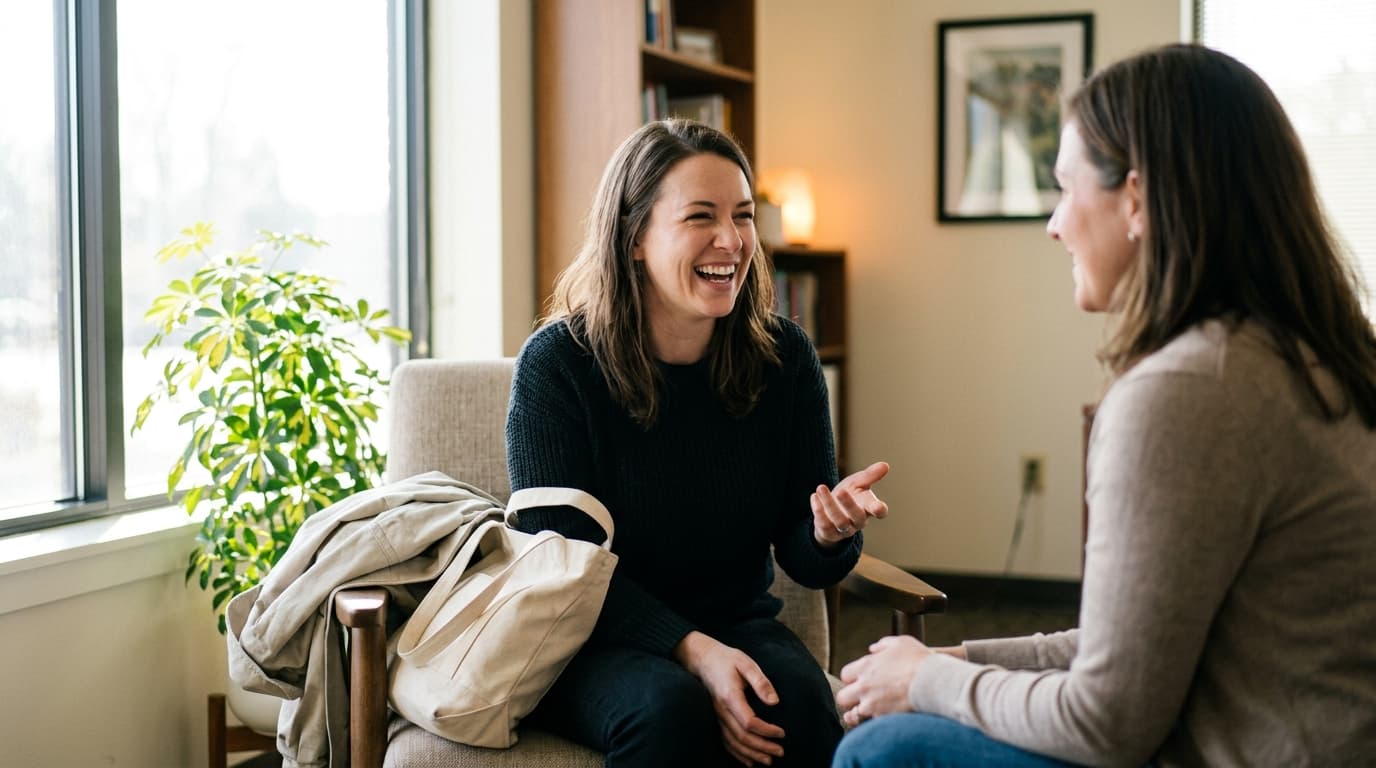
The barrier is usually logistics, not willingness
A lot of people who need treatment never start, and the reason is rarely that they do not want help. It is that they cannot see how to get it without walking away from a job, a paycheck, or the people who depend on them. Residential treatment asks someone to put life on hold for weeks. For a single parent, a shift worker, or anyone whose family runs on their income, that is simply not possible, and it should not be the only door available.
This is one reason outpatient care is the most common form of substance use treatment in the country. According to SAMHSA's 2024 National Substance Use and Mental Health Services Survey, 83.8% of treatment facilities, 13,369 in total, reported providing outpatient care. It is the level of care most people actually use, and it exists because most people's lives do not stop for treatment.
What flexible outpatient actually looks like
"Outpatient" is not one thing. It spans a range of intensity, and understanding the difference helps families know what they are choosing. The ASAM Criteria, the framework most clinicians and insurers use to match people to the right level of care, breaks it down roughly like this:
-
Standard outpatient care (Level 1): Usually fewer than 9 hours of structured treatment per week for adults. This might mean weekly individual therapy, a group session, medication management, or family sessions, spread out over time.
-
Intensive outpatient treatment, or IOP (Level 2.1): Between 9 and 19 hours per week, typically spread across at least three days. This is where evening and half-day scheduling does the most work, since programs can run sessions after typical work hours or in a morning or afternoon block, several days a week.
-
High-intensity outpatient treatment (Level 2.5): 20 or more hours per week. Despite sometimes being called "partial hospitalization," ASAM classifies this as an outpatient level of care, not a hospital stay. It suits people who need close monitoring and a highly structured schedule but do not need to be supervised around the clock.
A half-day program might run three to four hours in the morning or afternoon. Evening IOP typically meets after work, often three to five evenings a week. Both formats deliver real clinical content: group therapy, individual counseling, skills training, and often medication management, on a schedule built around the hours people are not at work or caring for their families.
What happens inside these programs
Depending on the diagnosis and the treatment plan, an evening or half-day program may include individual and group counseling, cognitive behavioral therapy or other evidence-based approaches, family sessions, relapse prevention and coping skills work, and case management to help with housing, transportation, or childcare barriers that could otherwise derail treatment.
Medication is often part of the picture for substance use disorders. The National Institute on Drug Abuse identifies methadone, buprenorphine, and naltrexone as medications for opioid use disorder that reduce illicit opioid use and overdose risk when properly prescribed. A program worth choosing should be able to offer these medications directly or coordinate closely with a prescriber, and counseling should not delay someone's access to them.
Toxicology testing, psychiatric evaluation, and coordination with a person's primary care doctor or existing therapist are also common features of a well-run outpatient program. The goal is a full clinical picture, not just a room and a schedule.
Why stepping down is not a lesser commitment
There is a myth that choosing evening or half-day treatment over a full residential stay means taking recovery less seriously. In practice, learning to stay sober while living an actual life, going to work, coming home, managing stress and old triggers without a substance, is where recovery gets tested and becomes durable. Flexible programs let people practice new coping skills in the same environment where they will need to use them for years to come.
Who this fits, and who needs something more
Level of care should be decided by clinical need, not convenience. ASAM's framework looks at several dimensions: withdrawal risk, medical and psychiatric stability, readiness to change, risk of relapse, and whether the home environment supports recovery. Evening and half-day treatment generally fits people who are medically stable, not at risk of dangerous withdrawal, and able to stay safe between sessions.
It is not the right starting point for everyone. Alcohol and benzodiazepine withdrawal can become medically dangerous and may require supervised detox first. Someone with an unstable psychiatric condition, a recent overdose, or an unsafe living situation may need residential care or a higher-intensity program before stepping down to evening hours. A good assessment asks about all of this before scheduling is even discussed, and a person in crisis, with thoughts of suicide, uncontrolled psychosis, or a medical emergency, should go to emergency care rather than wait for an evening session.
Questions worth asking before enrolling
Families evaluating a program can ask whether sessions can be split into half-day blocks or run after work hours, how many hours and days per week are required, whether psychiatric or medical support is available during treatment, and how the program handles a crisis after hours. It also helps to ask how absences, transportation, or childcare conflicts are handled, since real life does not stop just because treatment started.
Insurance coverage for outpatient levels varies by plan and state, so it is worth confirming in advance whether IOP or high-intensity outpatient services are covered, whether prior authorization is needed, and what happens if the recommended level of care changes. A program's clinical team can document medical necessity, and a denial can usually be appealed.
The bottom line on access
In the 2024 National Survey on Drug Use and Health, an estimated 7.1 million people age 12 or older, 2.5% of that population, received outpatient substance use treatment, and most of them were treated outside a general medical office. That still leaves a large number of people who need care and do not get it, often because of cost, waitlists, transportation, or a schedule that would cost them their job.
Removing that logistical barrier is often the difference between getting help this month and putting it off another year. Providers like East Point Behavioral Health offer half-day and evening intensive outpatient options, in person or virtually, precisely so that treatment can fit around a person's job and family rather than replace them.
If a job, kids, or a full calendar have been the reason treatment keeps getting delayed, the next step is a conversation with a program that can explain, plainly, what a realistic schedule would actually look like.
Keep reading

How a Personalized Treatment Plan Actually Gets Built
A real treatment plan is built from a whole-person assessment, honest safety screening, and evidence-based options matched to that person, then revised as things change. It is not a diagnosis-based template. Here is what actually goes into building one, and what to ask if you are not seeing it.
What Detox Really Involves, and Why Medical Supervision Matters
Detox is the first step of recovery, not the whole of it. Here is what medically supervised detox actually involves, why the setting is chosen based on risk rather than preference, and why it must lead into ongoing treatment to matter.
PHP vs. IOP: Which Level of Outpatient Care Is Right for You?
Outpatient treatment is not one thing. A partial hospitalization program (PHP) and an intensive outpatient program (IOP) differ in weekly hours, clinical intensity, and who they fit. PHP generally means 20 or more hours a week; IOP generally means 9 to 19 hours. The right choice depends on stability and safety, not preference.

Inside a Day Treatment Program: What a Typical Day in PHP Looks Like
Day treatment, also called a partial hospitalization program or PHP, is the most intensive care available while still sleeping at home. A typical day includes check-in, individual and group therapy, psychoeducation, and medication management, usually 20 or more hours a week for substance use care.
Behavioral Health Updates is an independent industry publication published by vProGo.