Enabling vs. Supporting: The Line Every Family Blurs
Every family wants to support a loved one in addiction. The tragedy is that support and enabling feel almost identical from the inside. The practical test is whether an action reduces consequences and preserves the addiction, or backs recovery while holding a boundary. Here is how to tell them apart.

Two things that feel the same
No family sets out to enable an addiction. They set out to love, to help, to keep a person they adore from hitting bottom. The cruel part is that enabling and supporting feel nearly identical from the inside. Both come from love. Both feel, in the moment, like the caring thing to do. And yet one helps a person heal while the other helps the addiction survive.
If you are living this right now, you are not alone in it, and you are not failing at some obvious task everyone else finds easy. In 2024, an estimated 48.4 million Americans age 12 and older, 16.8% of the population, had a past-year substance use disorder, including 27.9 million with alcohol use disorder and 28.2 million with a drug use disorder, some with both according to SAMHSA's 2024 national survey. Millions of families are standing exactly where you are standing, trying to figure out where love ends and enabling begins.
What enabling actually is
Enabling is anything that softens the natural consequences of the addiction, letting the person keep using without facing the full weight of it. Paying the debt, covering for the missed work, smoothing over the damage, giving one more chance that is really the fortieth. Each act feels like love, and each one quietly removes a reason to change.
Common enabling patterns look like this in real families:
- Giving cash that may go toward alcohol or drugs
- Calling an employer, school, or creditor to explain away repeated substance-related problems
- Lying to relatives, or hiding the truth to keep the peace
- Rescuing the person from legal, financial, or relationship consequences over and over
- Tolerating intoxication, threats, theft, or unsafe behavior inside your own home
- Monitoring, policing, and arguing in an attempt to control someone else's use
- Making treatment the only condition for love or contact, rather than a separate conversation
None of these come from indifference. They come from fear of what happens if you stop. That fear is real. But every one of them quietly tells the addiction it is safe to continue.
What real support looks like
Support, by contrast, backs the person's recovery rather than their addiction. It is warmth without rescue. It might mean being present and honest while refusing to fund the using. It might mean holding a boundary with love instead of removing a consequence. Support says: I am here, and I will not help the addiction hurt you.
In practice, support tends to look like this:
- Paying a bill directly, or providing groceries and necessities, rather than handing over unrestricted cash
- Allowing the person to experience appropriate, non-dangerous consequences instead of absorbing them
- Describing the situation honestly while still protecting privacy and dignity
- Offering to help with an assessment, a treatment appointment, transportation, or a recovery plan
- Setting clear conditions for access to the home, money, transportation, or the children
- Communicating concern and stating limits, then focusing on what is actually within your control
- Separating care for the person from permission for harmful behavior
A boundary is a statement about what you will do, not a demand that the other person must obey. "I will not give you cash. I will buy groceries if you are sober when we meet." "You cannot drive the children after using. If you are impaired, I will arrange another ride." Boundaries work when they are specific, consistent, and something you can actually enforce. Do not announce a consequence you cannot safely carry out.
How to tell them apart
The clarifying question is simple, if uncomfortable: does this help the person, or does it help the addiction? Am I making it easier for them to recover, or easier for them to keep using without feeling it? Ask that honestly and the line, so blurry from the inside, starts to sharpen.
Timing and tone matter too. Choose a calm, sober moment for hard conversations. Use concrete observations instead of labels: "You missed three shifts and drove after drinking twice" lands differently than "you have a problem." Offer one or two practical next steps, an assessment, a screening, a counseling appointment, a recovery meeting, rather than an ultimatum with nowhere to go. And do not attempt to manage withdrawal at home or stop prescribed medications abruptly. Alcohol, benzodiazepine, and some other withdrawals can be medically dangerous and need supervision.
If opioid use or an unknown drug supply is part of the picture, keep naloxone on hand and learn to use it. If there is immediate danger, an overdose, serious withdrawal, violence, or a weapon involved, call 911. For a mental health or substance use crisis without immediate physical danger, call or text 988, and the crisis resources at Loving Lions can help you think through what to do next.
Why the stakes reach further than one household
This is not only about the person using. NIAAA's analysis of the 2023 National Survey on Drug Use and Health found an estimated 19 million children live with at least one parent who meets criteria for a substance use disorder, more than 12 million of them with a parent meeting criteria for alcohol use disorder specifically. NIAAA also reports that parental alcohol use is implicated in up to 11% of child maltreatment cases, and identifies broader secondhand effects of alcohol including interpersonal violence, assault, and unsafe driving. Enabling does not just delay someone's recovery. It can extend risk to everyone living in that household.
Approaches with real evidence behind them
You do not have to figure this out with willpower alone. Community Reinforcement and Family Training, known as CRAFT, is a structured approach built specifically for concerned family members. It teaches you to reinforce healthy, sober, and treatment-seeking behavior, avoid reinforcing use, communicate more effectively, apply planned nonviolent consequences, and protect your own wellbeing along the way. Unlike confrontational interventions, CRAFT does not require the person using substances to show up first. Trials and reviews have found it can increase treatment engagement compared with some traditional approaches, though results vary by study and substance, so it is worth working with a trained clinician rather than a generic script.
Family therapy is also widely available. SAMHSA's 2024 National Substance Use and Mental Health Services Survey found that 71.7% of substance use treatment facilities offered family counseling. Availability is not the same as quality, so ask whether the clinician is licensed and whether the model fits the person's age and substance.
Peer support groups such as Al-Anon, Nar-Anon, Alateen, and SMART Recovery Family and Friends exist for exactly this reason: to help family members hold the line without carrying it alone. They will not replace medical care or domestic violence resources when those are needed, but they change how isolated this feels.
The line you can hold today
In 2024, 52.6 million people age 12 and older, 18.2% of that population, were estimated to need substance use treatment, yet only a fraction receive it. Among people with alcohol use disorder specifically, NIAAA's analysis found just 7.6%, about 2.1 million people, received alcohol use treatment that year. Your loved one may be part of that gap for a long time. That is not a verdict on your love, and it is not something you can fix by absorbing more consequences on their behalf.
This distinction is at the heart of the Loving Lions approach, and there is practical guidance for walking it at a guide to enabling versus supporting recovery. Wanting to help is not the problem. Learning the difference between helping the person and helping the addiction is where everything changes.
Keep reading

Boundary Scripts: What to Say When You Set a Limit
Knowing you need a boundary is one thing. Finding the words in the moment is another. Here is exactly how to say a limit clearly, with love, when your heart is pounding and the old excuses start pouring in, so the boundary actually holds.

When Helping Hurts: How Rescue Feeds the Addiction
Some of the most damaging things families do in addiction are the most loving. Rescue, meant to save a person, quietly protects the disease instead. Here is how repeatedly erasing consequences works against recovery, and what evidence-based approaches like CRAFT suggest families do instead to actually help.

Detaching With Love Without Giving Up
"Detaching with love" is one of recovery's most misunderstood phrases. Families hear it and think they are being told to stop caring or walk away. In truth it means staying connected while releasing responsibility for another adult's choices, protecting your own health, finances, and peace while the person you love keeps that responsibility.
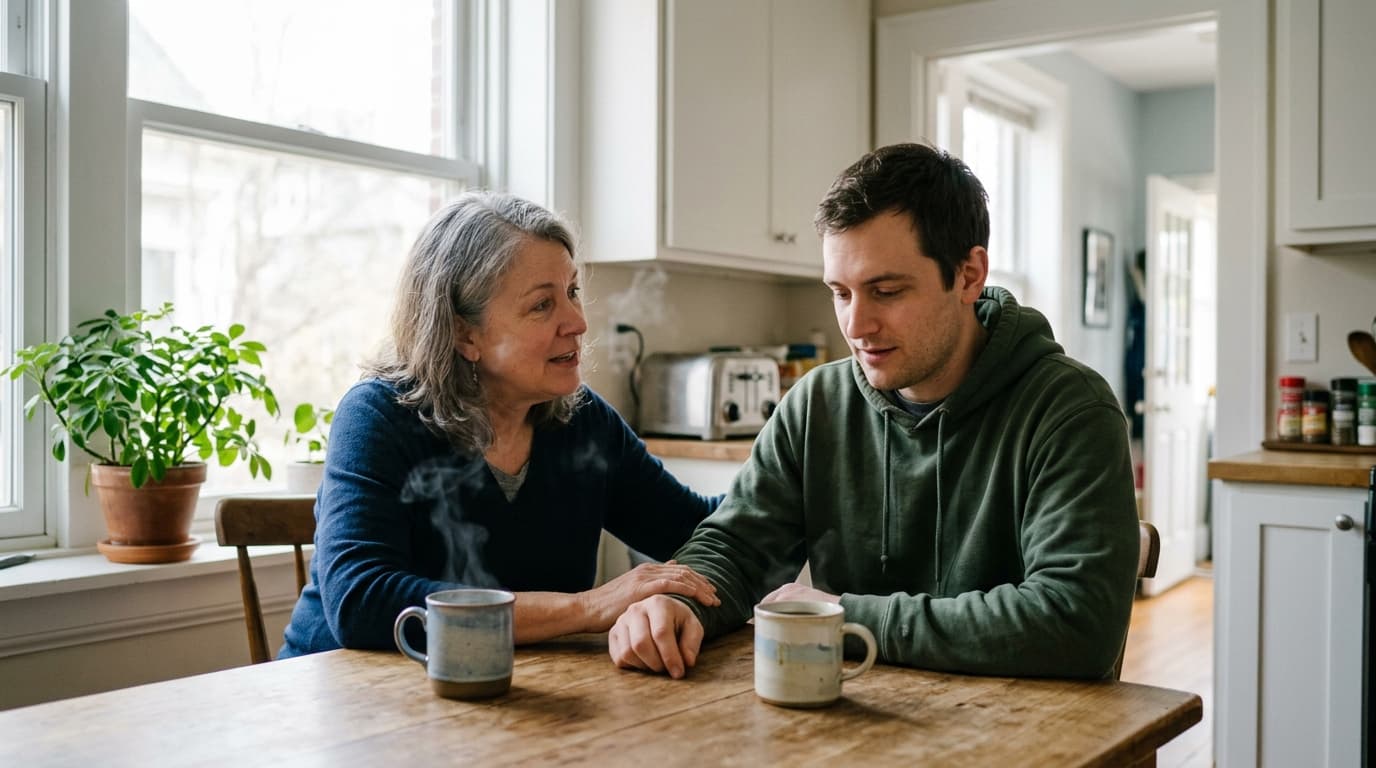
Setting Boundaries With Love: The Hardest, Most Necessary Skill
For families of addiction, boundaries are the hardest thing to set and the most necessary. A boundary limits what you will do, not what your loved one does, and research on family-focused approaches like CRAFT shows this steady kind of love can open the door to treatment more often than confrontation ever will.
Behavioral Health Updates is an independent industry publication published by vProGo.