Why a Man in Long-Term Recovery Wrote a Book for Families
Most addiction resources speak to the person using. Loving Lions was written for everyone around them, by someone who had been the one they were trying to save, and it exists because the data shows families carry this disease too, often with almost no support of their own.
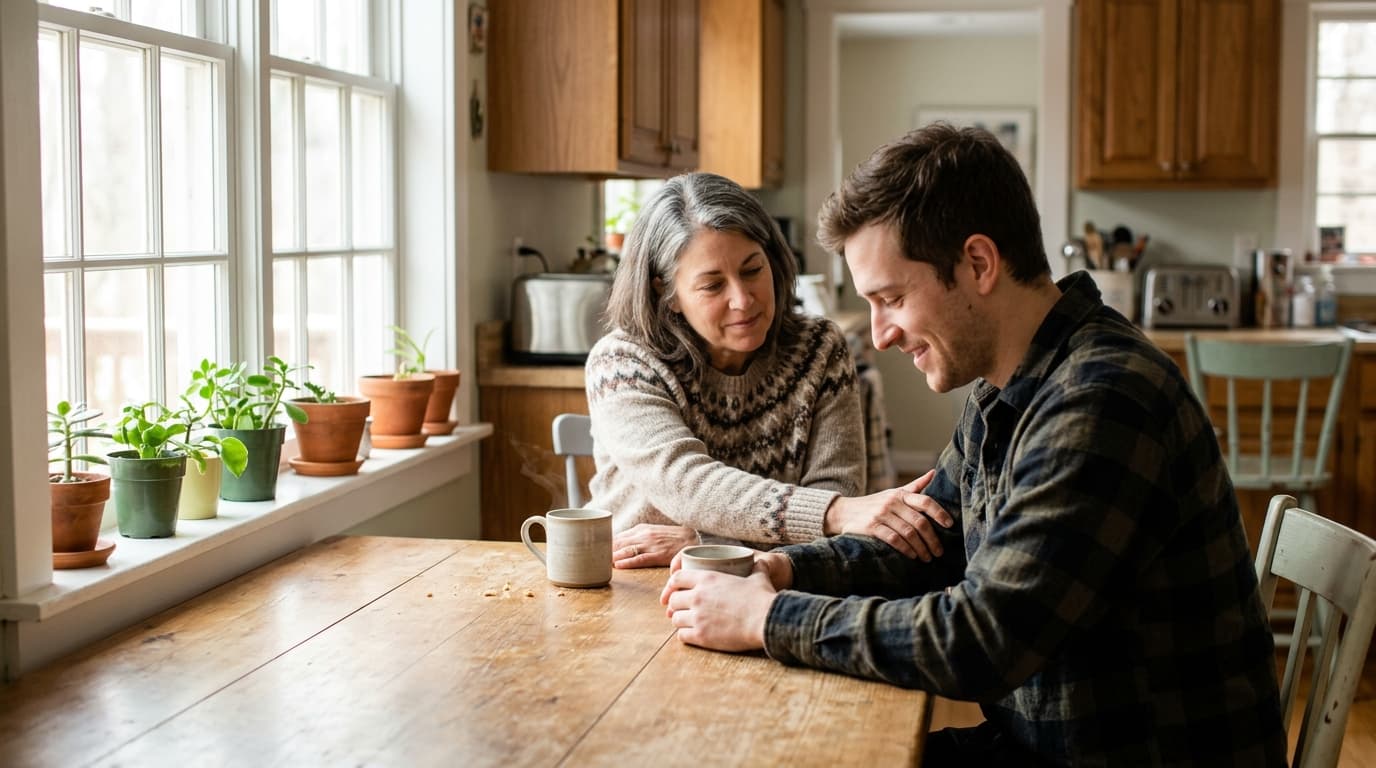
Writing for the people in the waiting room
Walk through the addiction section of any bookstore and nearly everything is aimed at the person with the problem. The families, the people in the metaphorical waiting room, doing everything they can think of and watching it fail, have far fewer places to turn. Loving Lions was written to fill that gap, and it was written by someone who had been on the other side of it.
That gap is not a small oversight. In 2024, an estimated 48.4 million Americans age 12 or older, 16.8% of the population, had a past-year substance use disorder, including 27.9 million with alcohol use disorder, 28.2 million with drug use disorder, and 7.7 million with both, according to SAMHSA's 2024 National Survey on Drug Use and Health. Each of those people has a family orbiting them: parents, partners, children, siblings, in-laws. The prevalence numbers describe the person using. They say nothing about the people lying awake wondering if tonight is the night the phone rings.
The view from both sides
Michael J. Wilson Jr. lived through active addiction and into long-term recovery, and he watched his own family struggle to reach him. That gives the book an unusual vantage point: he can describe what the family was doing that did not work, and why, from the inside of the very thing they were trying to fix. He is not guessing at what families should try differently. He remembers being the person they were desperate to save, and he remembers exactly which conversations landed and which ones bounced off him like they were never spoken.
That dual view matters because so much advice aimed at families comes from only one direction. Clinicians see the pattern from the outside. Families feel it from the inside, exhausted and unsure whether their next move will help or make things worse. A person who has occupied both positions can translate between them in a way neither can alone.
Why family-focused help is not optional
Only 10.2 million people, or 19.3% of those who needed substance use disorder treatment in 2024, actually received it, according to the same SAMHSA report. That means roughly four in five people who needed treatment did not get it. Families are frequently the ones standing in that gap, trying to hold a household together while someone they love goes untreated for months or years.
This has consequences for the family that show up whether or not the person ever gets help. Relatives living with someone's active addiction often carry chronic stress and uncertainty, especially around intoxication, withdrawal, overdose risk, or unpredictable behavior. Trust erodes through broken commitments and secrecy. Someone ends up managing crises, covering shifts, or compensating for missed responsibilities. Anxiety, depression, and burnout are common among caregivers in this position. Children in the household sometimes take on responsibilities well beyond their age just to keep things functioning.
None of that is evidence that the family caused the addiction. Substance use disorder is a health condition shaped by biological, psychological, and social factors. Families can influence the environment around someone and support their path toward treatment, but they cannot control another person's recovery, no matter how much they love them or how hard they try.
What actually helps, according to the evidence
This is where the book's frameworks, loving a lion instead of a house cat, understanding the voluntary hostage and the circle of chaos, line up with what research on family-focused care actually supports. The National Institute on Alcohol Abuse and Alcoholism notes that couples and family counseling can improve relationships within the household, and that stronger family support through therapy is associated with better outcomes than individual counseling alone.
CRAFT, Community Reinforcement and Family Training, is a structured approach built specifically for family members who want to help someone accept treatment. It teaches relatives to reinforce healthy behavior instead of rewarding behavior tied to substance use, to communicate calmly and specifically rather than confront, and to encourage treatment while protecting their own safety and boundaries. NIAAA identifies CRAFT as more effective than a confrontational intervention for helping someone accept treatment. Families do not need to wait for the person to hit some imagined bottom before this kind of approach can help.
Family education and mutual-support groups, like Al-Anon Family Groups, give relatives a place to understand the disease, reduce isolation, and build boundaries and safety plans without needing the person using substances to participate at all. That last point deserves repeating: family support does not require the other person's cooperation to be worthwhile.
The book he wished his family had
In a real sense, Loving Lions is the book Wilson wished someone had handed his own family, guidance that would have helped them love him in a way that actually worked, instead of a way the addiction could exploit. You can read more about that at Loving Lions, and the first ten chapters are free to read online at lovinglionsbook.com/book.
Families who want a next step beyond the book can also work through the Educational Hub, which answers 221 real situations families face, or read the guide on the difference between enabling and supporting recovery, a distinction that trips up nearly every family at some point.
A person who has been the lion, and who came back, has something rare to offer the families still trying to reach one: not theory, but memory, turned into guidance families can actually use. If your family is in crisis right now, or if overdose is a concern, the 988 Suicide and Crisis Lifeline and the SAMHSA National Helpline at 1-800-662-4357 are available, and neither requires the person using substances to make the call.
Keep reading

The Book, the Audio, and the App: How to Use the Loving Lions Companion
Loving Lions is more than a book now. In 2024, 48.4 million Americans age 12 or older had a past year substance use disorder, per SAMHSA, and their families need support in every format. Here is how the book, audio, and companion app work together to guide a family through addiction, at whatever hour the need hits.

The Circle of Chaos and Confusion: Why Addiction Feels So Crazy-Making
Families living with addiction often feel like they are losing their minds. The chaos is not random, it has a purpose, and research on family cycles and treatment engagement shows why understanding that purpose changes what you can actually do about it.

Loving a Lion, Not a House Cat: A New Way to Understand Addiction in Your Family
Addiction turns the person you love into something the old love no longer works on. The Loving Lions framework explains why, and pairs that honest picture with what research shows actually helps: boundaries, family support, and structured approaches like CRAFT that improve treatment entry and family well-being.

What's Inside Loving Lions: A Guide for Families Struggling With Addiction
Loving Lions is a field guide for families living with a loved one's addiction. It explains what the book covers, why it centers boundaries over confrontation, how its "lion" framework works, and how families actually use it during crisis, everyday exhaustion, and the slow work of their own recovery.
Behavioral Health Updates is an independent industry publication published by vProGo.