Behavioral Health Updates

Family Recovery and Self-Care

Guidance for parents, partners, siblings, and adult children on healing their own lives while someone they love struggles with addiction.

Loving someone with addiction changes you too. You carry grief, fear, and guilt that can be hard to explain to anyone who hasn't lived it, and your own needs often get pushed to the back burner while the crisis in front of you takes over. This section is built around one idea: your recovery matters on its own terms, not just as support for theirs.

Here you'll find guidance sorted by role, since a parent, a spouse, a sibling, and an adult child each carry different weight and face different decisions. You'll also find what the research actually says about family involvement and outcomes, a first-30-days plan for families ready to change how they respond, and honest looks at the emotions that show up uninvited.
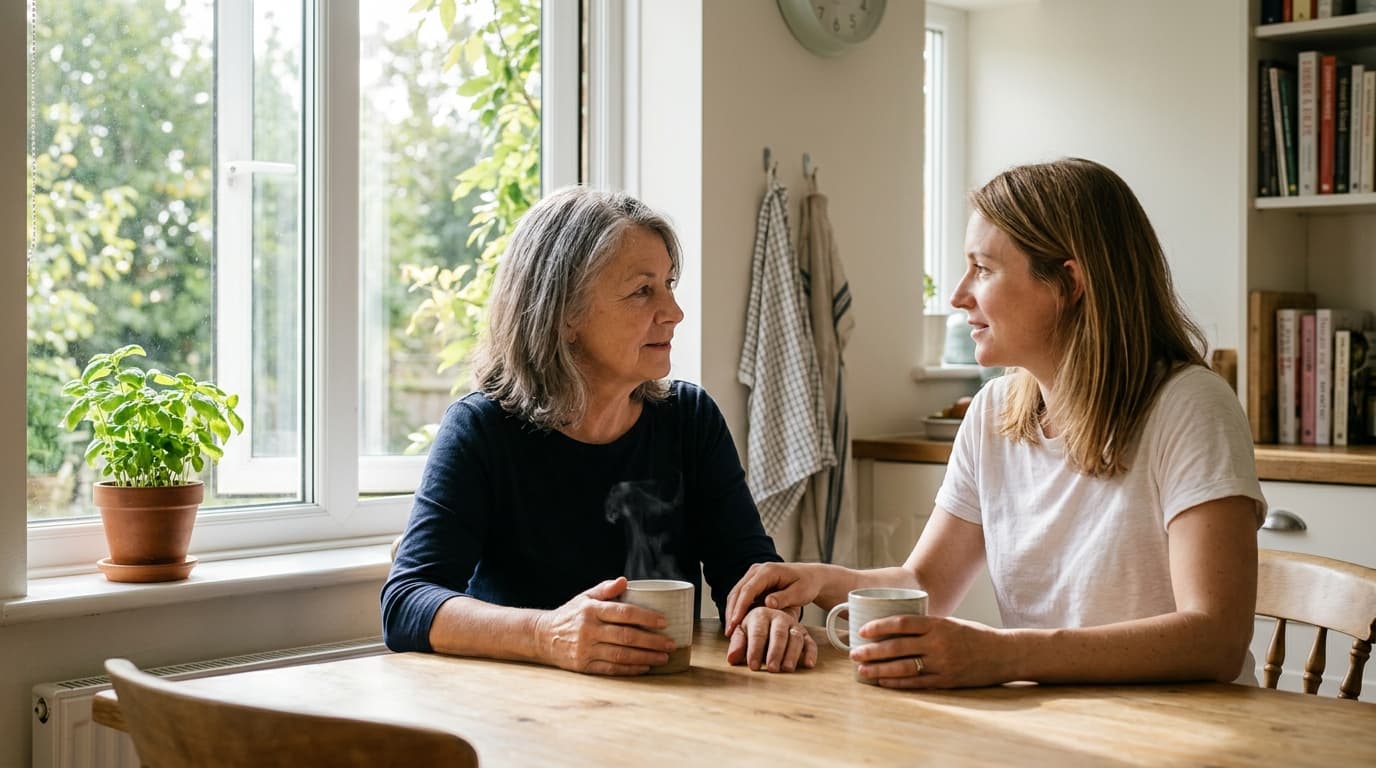
Articles on family recovery and self-care

Family Recovery and Self-Care

Grief, Fear, and Guilt: The Emotions No One Warns Families About

Families of addiction carry grief for someone still alive, fear that never fully rests, and guilt that answers no logic. This is why those feelings show up, what the research says about family focused support, and concrete steps to help you carry the weight without being crushed by it.

Michael J. Wilson Jr., CIP, CFI ·

Common questions

Can family involvement really change how someone's addiction recovery goes?

Yes. Research consistently shows family involvement is one of the strongest predictors of recovery outcomes. This does not mean you are responsible for their recovery, but how a family responds, communicates, and sets boundaries can meaningfully influence whether a loved one engages with treatment and stays in it.

Why do I feel guilty when my loved one is the one with the addiction?

Guilt is extremely common in families affected by addiction, even though it rarely holds up to logic. It often comes from wondering what you could have done differently, or from setting a boundary that felt necessary but still hurt. Naming the guilt and understanding where it comes from is usually the first step to loosening its grip.

What is CRAFT and is it different from Al-Anon?

CRAFT is a structured, skills-based approach that teaches families specific communication and boundary-setting techniques shown to help move a loved one toward treatment. Al-Anon is a peer support community built on shared experience and mutual support. Many families use both together, since they serve different but complementary purposes.

How do I set a boundary with my adult child without cutting them off?

Start with one boundary tied to a specific behavior, not their character, and decide it in a calm moment rather than mid-crisis. Communicate it clearly and stick to the consequence you named, even when it is hard. A boundary is meant to protect you and clarify the relationship, not to punish or abandon them.

Do siblings and adult children of a parent's addiction need their own support?

Yes. Siblings and adult children are often overlooked because attention naturally goes to the person struggling or to a spouse or parent. Their grief and confusion are just as real and deserve dedicated support, whether through counseling, peer groups, or resources written specifically for their role in the family.

What should I do if I'm afraid my loved one is in danger right now?

If you believe there is immediate risk to their life, including overdose or suicidal thoughts, call 911 or contact the 988 Suicide and Crisis Lifeline by calling or texting 988. Do not wait to see if the situation resolves on its own, and reach out to a qualified professional for guidance on next steps.

More for families